
Listing cards
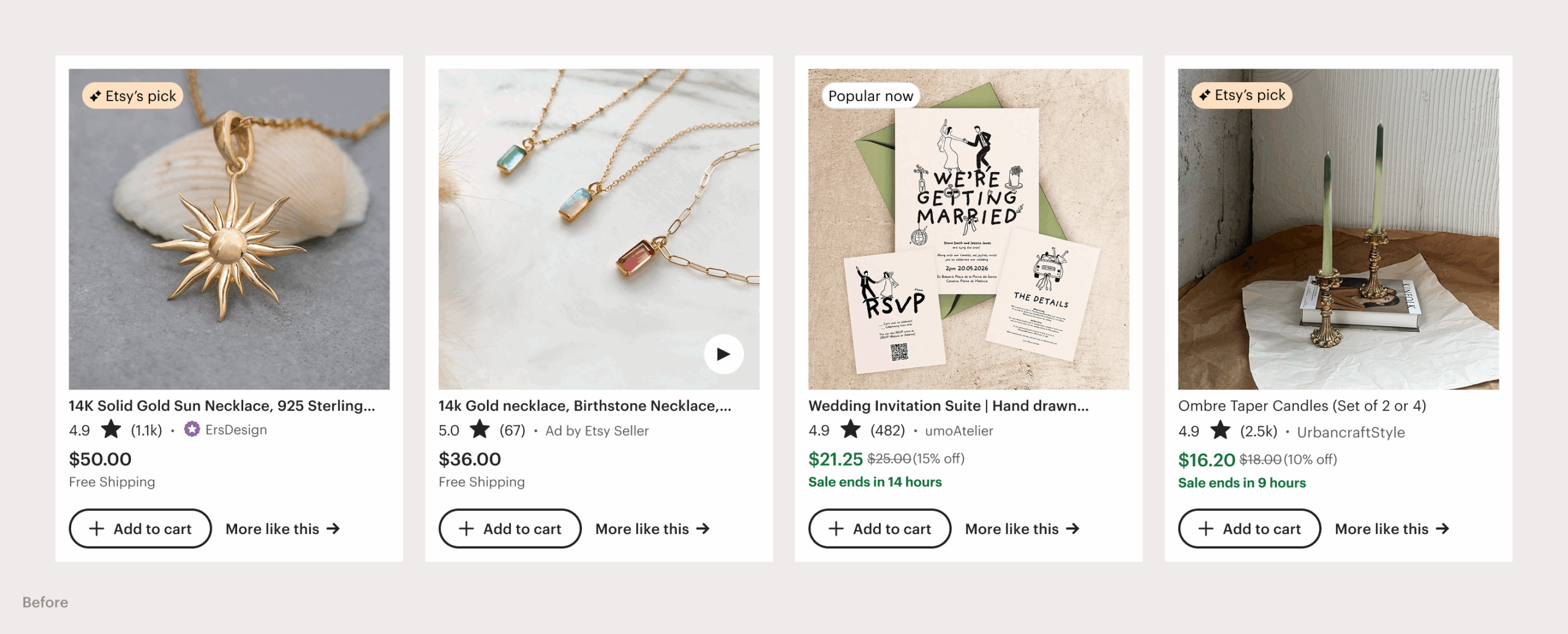
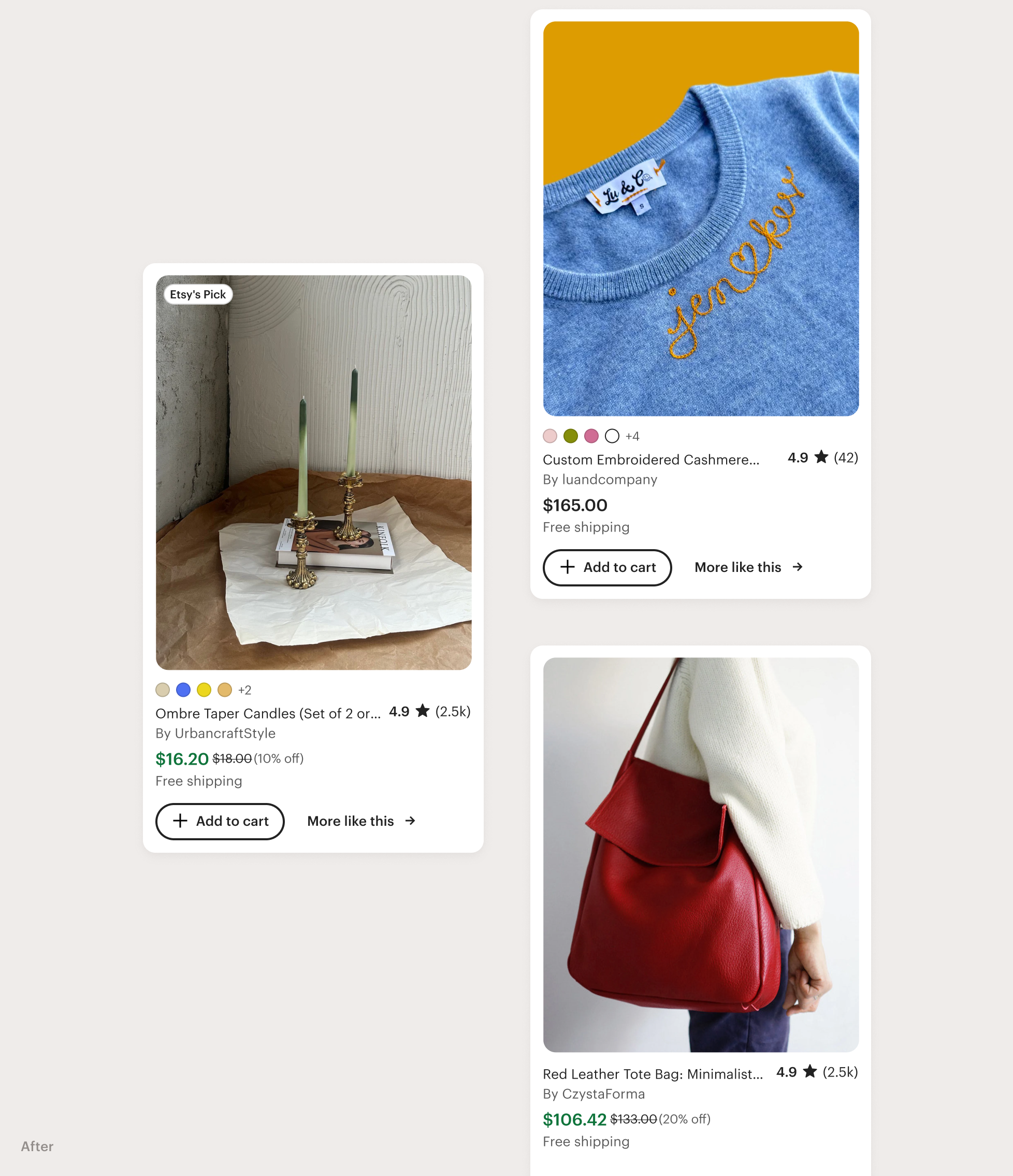
Listing cards play a pivotal role in every stage of a buyer’s search journey. On initial landing, they orient buyers to Etsy’s inventory and help them decide whether additional refinement is needed. Once buyers are generally satisfied with the results, listing cards surface essential details that support item evaluation and comparison.
My role
Led the strategic and incremental design of search listing cards for Etsy’s web experience.
Impact
Modernized search listing cards, created cross-platform consistency, partnered with ML to optimize and introduce new signals, and meaningfully improved key business metrics including CR and PcCR.

Buyer problems
Overwhelming volume of results, irrelevant listings, and challening to differenciate items.
Outcome statement
As a buyer on Etsy, I can easily explore and evaluate results in search, so that I can successfully collect possibilities.
Listing card signals
Signals give buyers meaningful information that supports decision-making. In close partnership with design systems, analytics, and research, we simplified listing card templates, aligned them across platforms, and introduced a more modern visual language.
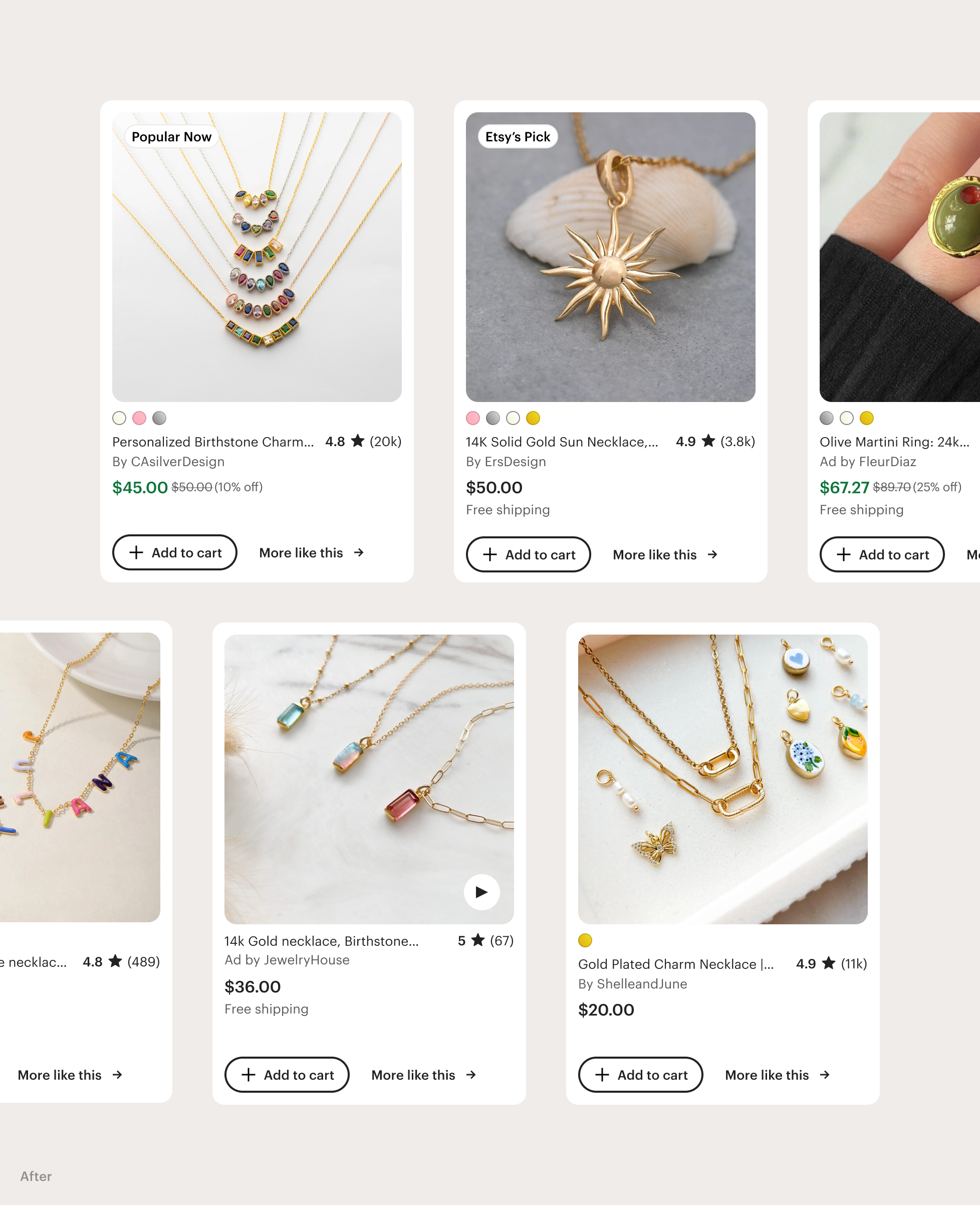
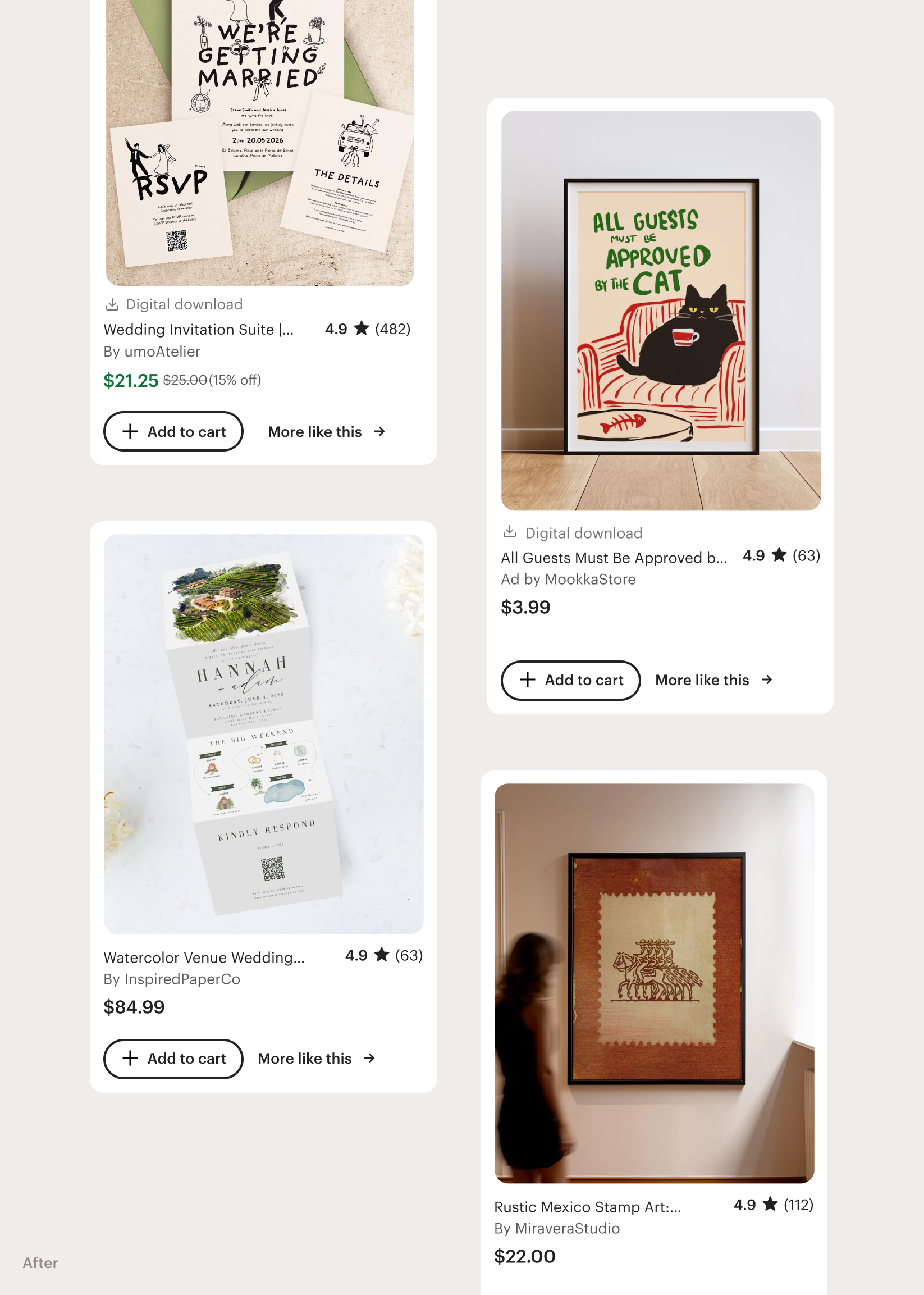
Leveraging ML
Designing for a two-sided marketplace with millions of listings requires accommodating highly variable, unstructured data. By partnering closely with ML teams, we transformed raw data into structured, consumable formats that could be seamlessly integrated into the user experience.
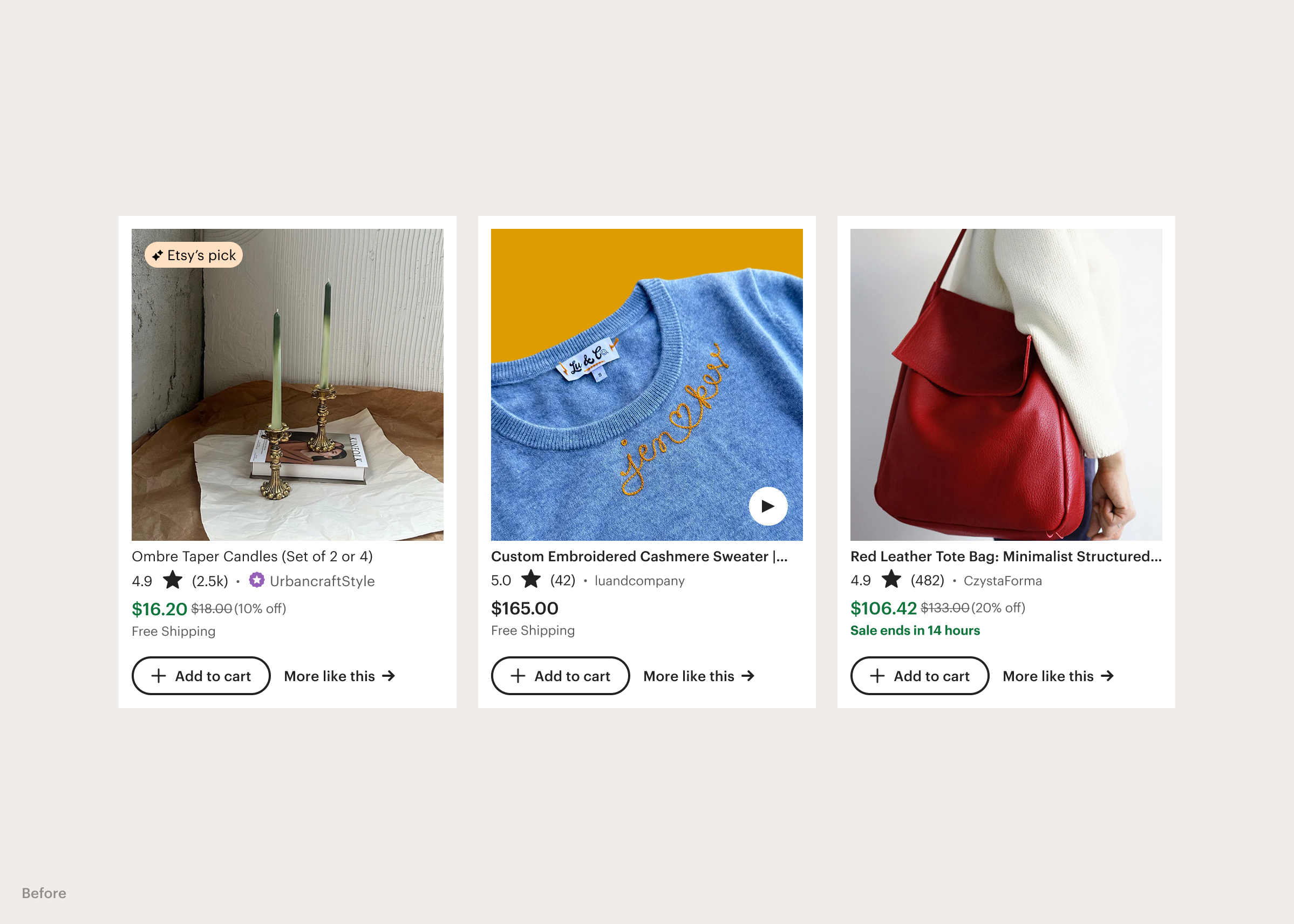
Highlights & learnings
UI doesn’t exist in isolation: The hierarchy of listing card elements depends on what surrounds them; even small adjustments can have outsized impact.
Less is more: Signals are important, but too many create visual and cognitive overload.
Design around real inventory: In a two-sided marketplace, effective solutions must be built around the realities of our unique inventory and data structures.
Contact
Email: claire.casaregola@gmail.com
LinkedIn: @clairecas